At Brongain Farm, we talk a lot about cattle but over the last few years, we’ve also been paying close attention to another “herd” that’s just as important: the billions of living organisms beneath our feet.
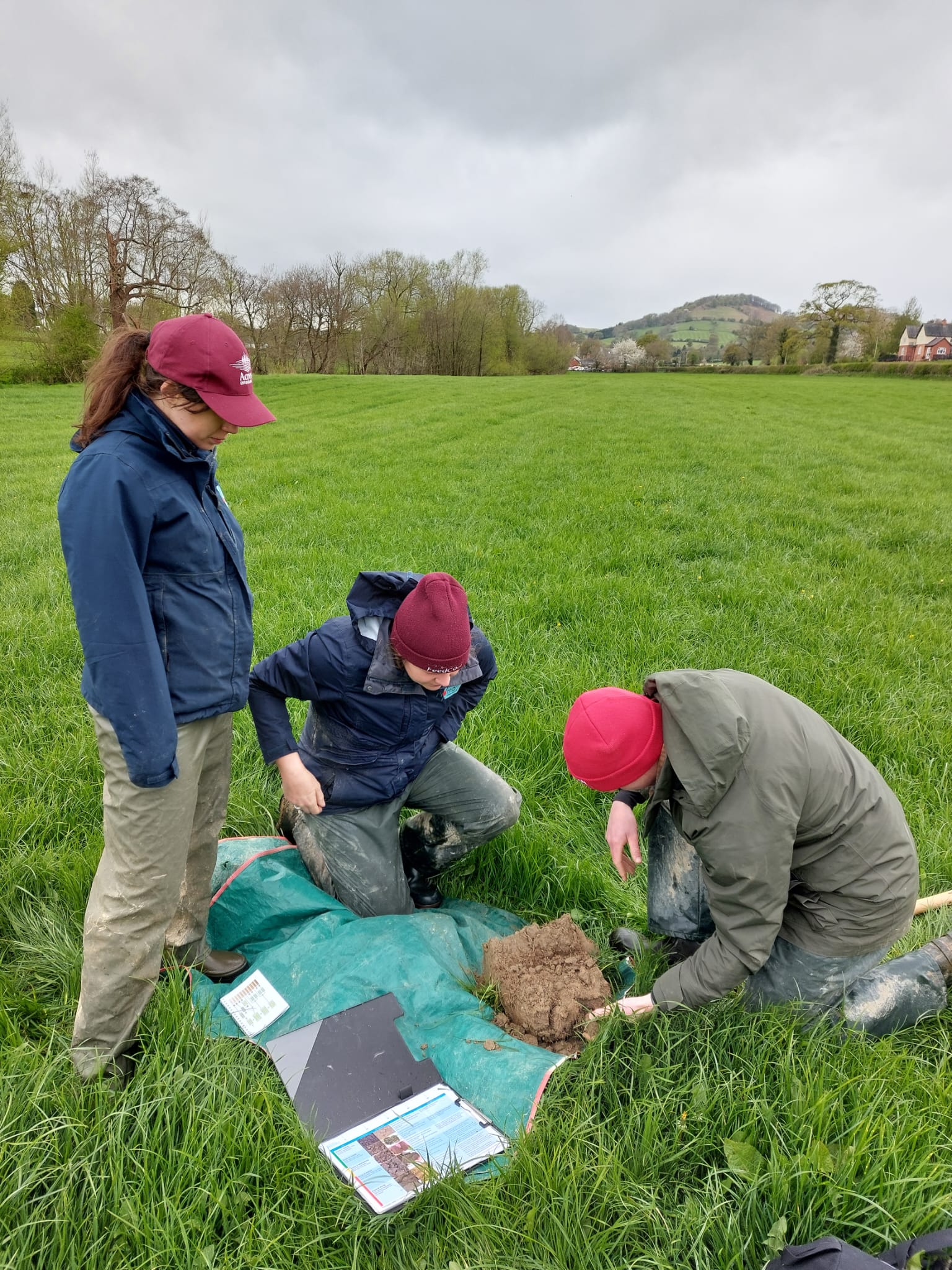
With support from McDonald’s and Promar, we’ve been measuring soil health and soil carbon across the farm for the past five years. The goal is simple: understand how our grassland management affects long-term carbon storage, forage quality and overall farm resilience.
Why soil biology matters
Healthy soil is alive. A single handful contains more microbes than there are people on Earth. These tiny organisms:
- recycle nutrients
- improve soil structure
- help grass recover and grow
- store carbon securely in the ground
In short, when soil biology thrives, the whole farm thrives.
What we’re learning at Brongain
Soil structure is vital
Our soil tests showed compaction in several fields. When soil gets squashed, air and water can’t move freely, roots struggle, grass growth slows and carbon storage drops.
We’ve seen that our best-performing fields (with the highest clover levels and deepest roots) store far more carbon than compacted fields. So we’re now:
- avoiding machinery and grazing when soils are wet
- encouraging deeper-rooting grass species
- improving organic matter to keep soils “open” and aerated
Think of it like baking, good soil should be crumbly like chocolate cake, not dense like a brownie.
Getting pH right boosts the whole system
Most of our fields sit between pH 5.6 and 6.4 (slightly acidic).
Raising pH just a little helps:
- unlock nutrients for plants
- speed up biological activity
- increase grass yield
We’re now planning targeted lime applications to give our soil biology the conditions it needs to work at its best.
Organic matter feeds the soil and improves carbon storage
Fields with higher organic matter (5.8%–10%+) are also the fields storing the most carbon. To build this further, we’re:
- keeping more green cover
- returning manure to the fields that need it
- increasing plant diversity for deeper rooting
- trialling composting and biochar to improve manure consistency
Managing two herds above and below ground
The biggest lesson from five years of monitoring?
Our cattle rely on the microbial herd and the microbial herd relies on us.
Healthy soils help us:
- grow more resilient grass in dry conditions
- improve drainage in wet weather
- store carbon for the long term
- produce high-quality forage for our beef systemtrialling composting and biochar to improve manure consistency
By looking after the underground herd, we’re strengthening the sustainability and productivity of the whole farm.
Why this matters for Pickstock and British agriculture
What we learn at Brongain helps guide the wider Pickstock supply chain too. By sharing these findings with our farmers through farm walks, articles and our Integrated Beef Scheme, we’re aiming to support better soils, better grass and better beef production across the UK.
Healthy soils are the foundation of a sustainable farming future.
At Brongain, we’re proud to be putting this into practice every day above and below ground.